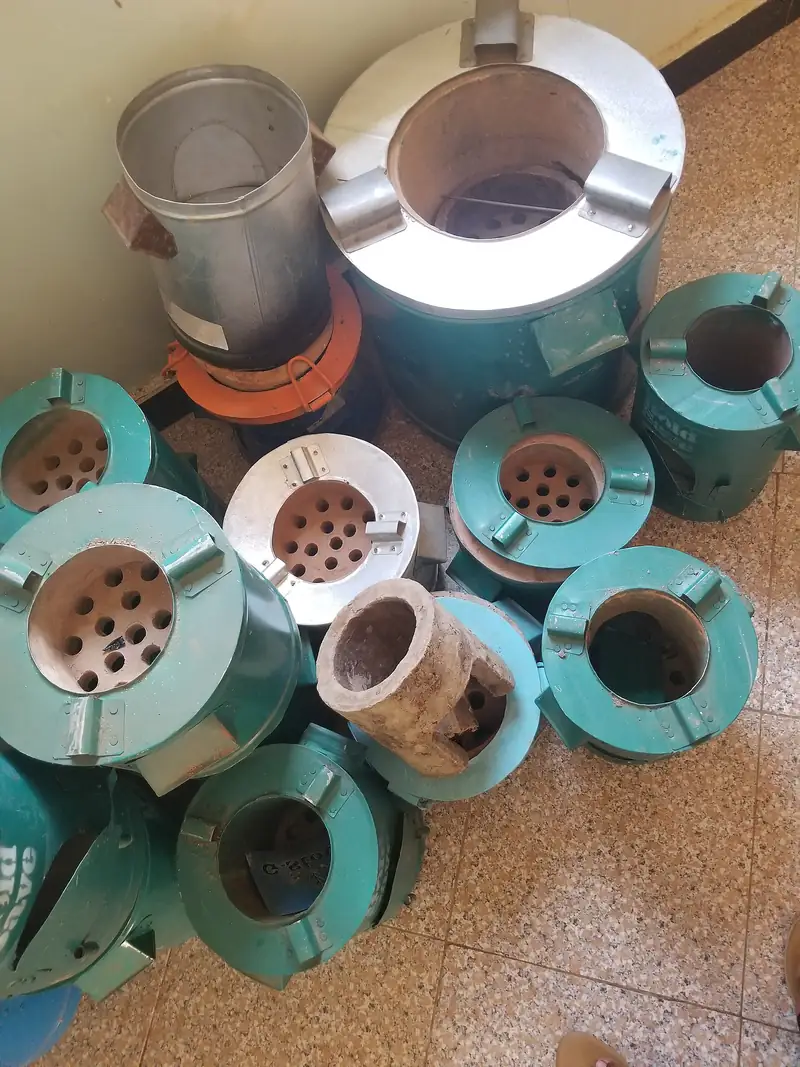
Most Ugandan households cook over an open fire or a simple charcoal stove. Wood and charcoal are cheap and widely available, but they burn slowly, waste much of their heat and fill the kitchen with smoke. Improved cookstoves try to solve this by using less fuel for the same meal. When a project replaces older stoves and less wood or charcoal is burned, the reduction can be measured and sold as carbon credits.
Clean cooking is one of the more established project types in Uganda, and it is also one of the most closely scrutinised. The carbon claim depends on assumptions about how much fuel a household would have burned without the new stove, and on whether the stove is actually used. This article explains what cookstove credits represent and what a buyer should check before paying for them.
What the Credits Measure
A cookstove credit is not a measurement of smoke or of the air inside a kitchen. It is an estimate of fuel saved, converted into carbon dioxide equivalent. The calculation usually compares the fuel used with the new stove against the fuel households would otherwise have burned, multiplied by emission factors for each fuel type. Small changes in those inputs can change the result a lot, so the method and the data behind it matter as much as the headline volume.
Non-Renewable Biomass: The Key Question
Many cookstove methodologies only credit fuel that comes from non-renewable sources. Wood cut from a sustainably managed woodlot may not count as a net emission in the same way as wood cut from a natural forest. Standards therefore ask projects to estimate the share of biomass that is non-renewable in the project area. That share is often one of the largest sources of uncertainty. Buyers should ask how it was estimated, how often it is updated and whether local household surveys support it.
Stove Use and Stacking
A stove that sits unused earns no credits, and a project that counts stoves it has not verified overstates its impact. Verifiers look for evidence that households use the new stove regularly and that it replaces the old method rather than sitting beside it. Many households keep a traditional stove for certain dishes, a practice called stove stacking. Stacking reduces the fuel saved. A credible project measures it through surveys, usage sensors or periodic follow-up visits, and reports the results.
Health and Livelihood Co-Benefits
Smoke from open fires is linked to respiratory illness. The World Health Organization estimates that household air pollution from cooking with solid fuels contributes to millions of premature deaths each year worldwide. Cleaner stoves can reduce exposure, and that is one reason clean cooking projects attract buyers who want a visible social story. However, the carbon credit does not prove health gains. Any health claim should be backed by separate evidence. Less time spent collecting fuel is another benefit, and it often falls to women and girls in the household.
Distribution, Pricing and After-Sales Service
Stoves have to be manufactured, sold or subsidised, delivered, repaired and replaced. A project that sells stoves on credit needs to show that households can keep up with payments. A project that distributes stoves at no cost must explain how that distribution is funded and tracked. Buyers should ask who manages the customer relationship, what happens when a stove breaks and how replacement is handled over the full crediting period.
What to Ask for in the Field
Desk checks only go so far. Ask the developer how the stove-use sample was drawn: whether households were picked at random from the distribution list, whether the sample covers several villages and stove batches, and whether surveyors visited homes without warning. Ask how many stoves were found still in use, and what happened to the households that had stopped. A project that reports only the stoves it has sold, and not the stoves it still sees working, is describing its distribution rather than its impact.
Also check that the stove has been tested against the performance tier the methodology assumes, and that the design suits the fuel households really use. If a stove is marketed as efficient on charcoal but most users burn firewood, the fuel-saving estimate has to reflect that. The monitoring and verification guide explains how verifiers test usage claims like these.
Frequently Asked Questions
Are cookstove credits the same as forest credits?
No. A forest credit usually prevents or removes emissions from land, while a cookstove credit reduces the fuel burned in homes. Both can be real, but they carry different risks and need different evidence.
Do cookstove credits prove that health has improved?
No. Health benefits are a plausible co-benefit, but the carbon credit measures fuel use and emissions. Any health claim needs separate evidence.
What should a buyer ask for first?
Ask for the methodology version, the non-renewable biomass estimate, the usage monitoring plan and the most recent verification report. Check that the project is listed on the registry of the standard it uses, and compare the claimed volume with the number of stoves reported as in use.
Where should I read next?
See our overview of the top carbon credit projects in Uganda, which includes clean cooking developers, and our guide to how to buy carbon credits in Uganda.