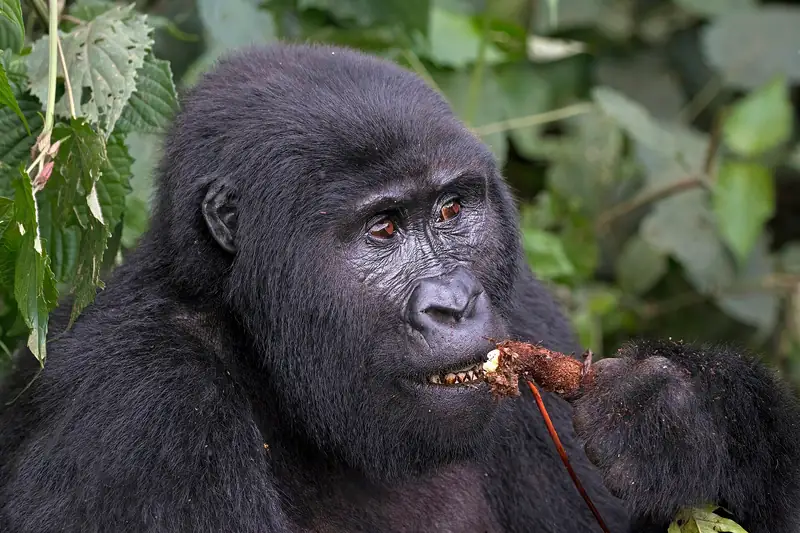
Mountain gorillas are among the most endangered great apes on Earth. The 2018 census counted about 1,063 individuals, all living in the Virunga Massif and the Bwindi Impenetrable Forest, a range that spans Uganda, Rwanda and the Democratic Republic of Congo. The forests that shelter these animals also store large amounts of carbon, which is why gorilla habitat can support carbon projects with a clear biodiversity story.
Uganda's gorilla habitat lies mainly in Bwindi Impenetrable National Park and Mgahinga Gorilla National Park, both managed by the Uganda Wildlife Authority. Carbon projects here must work inside park boundaries or in the buffer zones around them, which is more demanding than a project on private farmland. Because the land is protected, the case for additionality is usually strong, but the project has to show how local people who depend on forest resources gain from conservation instead of being shut out by it.
Buyers often find gorilla-linked credits attractive because the co-benefit is easy to explain to customers and staff. Prices for high-integrity biodiversity-linked credits vary widely by vintage, standard and buyer, and no single figure applies across the market. Before paying a premium, ask for the registry listing, the latest verification report, the biodiversity monitoring data and the evidence behind the price.
The biodiversity co-benefit certification (CCB Standards) applied to these projects provides an additional layer of verification for buyers who need to demonstrate nature-positive impact alongside their carbon claims. A project that can document stable or growing gorilla numbers in its monitoring area has a strong biodiversity case, but a CCB rating depends on the whole project, not on the species alone.
Why the Biodiversity Evidence Matters
A gorilla story is only as strong as its data. Projects need to show that the habitat they protect is changing for the better, which means regular surveys, a clear monitoring design and independent checks. Gorilla population counts in Uganda are generally carried out by the Uganda Wildlife Authority with research partners, so buyers should favour projects that link their monitoring to those official sources rather than to marketing figures.
Community Benefit at the Park Edge
Households living at the edge of gorilla forests have long relied on forest resources for firewood, building poles and grazing. Conservation rules can therefore impose real hardship, and carbon projects are often judged on whether they offset that cost. Revenue-sharing agreements funded from carbon sales can pay for alternatives such as improved cookstoves, tree nurseries or water points, but they only work when the agreement is written down, the payments are traceable and the communities have a voice in how the money is spent.
What a Complete Document Set Looks Like
A buyer who wants to test a gorilla-linked project should be able to assemble a short file of documents before paying. The project design document sets out the boundary, the baseline and the leakage assessment. The most recent verification report confirms that the carbon claimed was measured by an independent auditor. The biodiversity monitoring plan explains which indicators are tracked, how often surveys run and who carries them out. The community agreement records the revenue split and how decisions about spending are made. If one of these is missing, the premium is hard to justify, whatever the marketing says. Our guide to monitoring and verification explains how these checks fit together, and our note on land tenure covers who holds the rights to the credits.
Timing matters too. Habitat trends may need several seasons of data before they are visible, so a project that is only a few years old may not yet have a biodiversity trend to show. Buyers can still buy, but they should price that risk accordingly and ask what the project will publish in its next verification cycle.
Frequently asked questions
Are gorilla carbon credits the same as gorilla tourism?
No. Tourism permits and carbon credits are separate sources of income. Carbon credits represent verified reductions or removals of greenhouse gases, while tourism revenue comes from visitors paying to see the gorillas. A project can benefit from both, but buyers should not count tourism income as carbon revenue.
Does a gorilla co-benefit guarantee quality?
No. A charismatic species makes a project easier to market, not more credible. The baseline, the leakage deduction and the permanence arrangements must still stand up to independent verification.
How can a buyer check a project?
Look the project up on the registry of the standard it claims, such as Verra or Gold Standard, and check that the verification report, monitoring data and CCB documents are published. Then compare them with the statements in any sales material.
Do gorilla projects need community consent?
Yes, where a project affects community land or depends on the people who live at the forest edge. Ask the developer for the written community agreement, the revenue-sharing terms and evidence that households were consulted before the project was designed. A statement in marketing material is not enough.
Where should I read next?
See our overview of Uganda's carbon markets and our guide to the top carbon credit projects in Uganda.