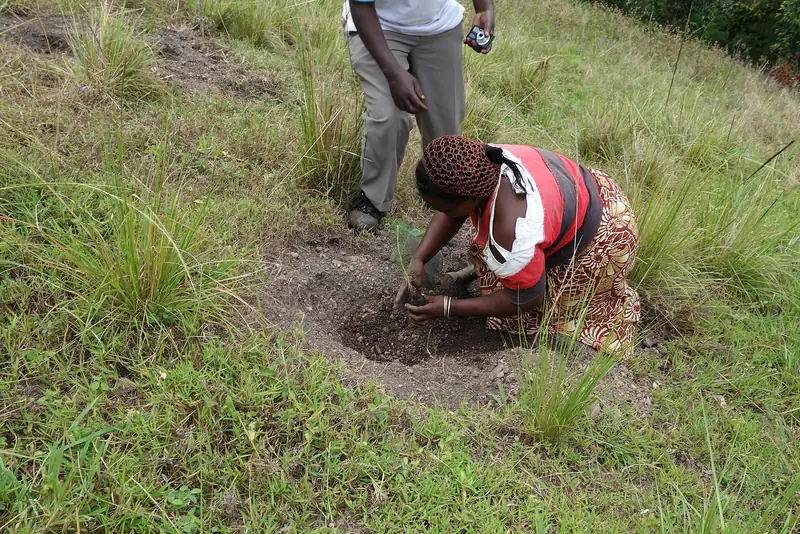
Planting trees is one of the most common ways for companies, schools and individuals in Uganda to take climate action. Tree-planting drives are easy to organise and easy to photograph, and many of them are described as carbon offsetting. A planted seedling does store carbon as it grows, but that does not make it a carbon credit. A credit is a verified claim that a specific quantity of greenhouse gas was reduced or removed, measured against a credible baseline and checked by an independent auditor. The gap between those two things is where most confusion, and most weak claims, sit.
Planting Is an Activity, Crediting Is a Result
A tree-planting campaign counts seedlings planted. A carbon project counts tonnes of carbon that would not otherwise have been stored. The first is an input and the second is an outcome. A project might plant thousands of trees and still generate few credits, if the land would have regenerated anyway, if the trees die early, or if the planting pushes activity somewhere else. Registries require a project to show additionality, meaning the carbon gain would not have happened without the credit revenue. A planting drive funded by donations alone rarely has to meet that test, which is why its results cannot be sold as credits without further work.
Survival, Growth and the Long Wait
Trees store carbon slowly. A seedling planted this year stores very little for several years, and its carbon only accumulates as it grows. Survival is the first risk. Seedlings can die from drought, browsing, fire or poor planting, and a project that does not replace its losses will overstate its results. Registries therefore ask for monitoring of survival and growth over time, usually through plot measurements, rather than a single count on planting day. The same logic underpins the rules described in our article on monitoring and verification.
Baselines and Leakage
A credit always compares the project with a baseline, the carbon stock that would have existed without it. For tree planting on land that is already farmed or grazed, the baseline may include trees that would have grown back anyway. Leakage is the other side of the problem. If planting pushes charcoal production or grazing onto neighbouring forest, part of the gain is lost elsewhere. Our guide to central forest reserves shows how these questions arise on public land, where displacement is a particular concern.
Permanence After the Planting Day
Once trees are credited, buyers need to know they will stay. Fire, clearing and illegal harvesting can reverse gains, and registries manage that risk through buffer reserves and through rules on what happens when a loss occurs. An unregistered planting drive has no such arrangement, so its claim rests entirely on the sponsor's word. Our article on buffer pools and permanence explains how that reserve works.
What Organisations Can Say Honestly
A planting campaign can still be valuable. It can restore habitat, support livelihoods and build a lasting relationship with a community. The accurate way to describe it is as a tree-planting or restoration activity, with the number of trees planted and the number surviving, not as a carbon offset. If an organisation wants to claim carbon benefits, the route is a registered project, or a purchase of credits from one, with a retirement record that can be checked. Buyers who want that proof can follow our steps for verifying a credit retirement.
Questions to Ask Before Calling a Planting Drive an Offset
Ask how many trees were planted and how many were alive at the last check, and who did the counting. Ask whether the land already had trees on it, and whether the project has a registry listing. Ask who will replace losses, and what happens if the trees are cut or burned. A campaign that can answer these questions is well placed to describe its work accurately. One that cannot should describe itself as planting, not offsetting.
Frequently Asked Questions
Is planting a tree the same as offsetting my emissions?
Not by itself. A tree is an activity. An offset is a verified, registered reduction or removal that someone else can buy and retire. Planting can become an offset only after it meets a credible standard.
Can I count trees I planted myself?
You can report them as a planting activity, with honest counts of trees planted and surviving. Counting them as carbon credits requires a registered project and independent verification.
Why do some projects take years to earn credits?
Credits follow measured carbon, and trees store carbon slowly. Projects are verified at intervals, so credits often appear only after several seasons of growth and monitoring.
Where should I read next?
Start with Uganda's carbon markets overview, then read how agroforestry works on Ugandan farms.