Community benefit is one of the first things a buyer should check on a Ugandan carbon project, and one of the easiest to overstate. Forest, wetland and farm projects all change how people use land their families have relied on for generations. A project that ignores those people may still store carbon on paper, but it is less likely to last, and it is harder to defend if a claim is questioned. This article explains what a documented benefit-sharing arrangement should contain and what to ask before you buy.
Why communities are part of the carbon case
Many Ugandan projects sit on land that people use every day. Forest projects in the west and north-west border farming communities, and households there have long relied on forest resources for firewood, building poles and grazing. Agroforestry projects work on smallholder plots, where land is often held under customary tenure. Wetland projects touch lakeshore and swamp communities who fish, harvest papyrus for mats and crafts, and graze animals. If a project restricts those uses without offering something in return, the result is often resistance, and resistance is a common reason projects fail to deliver what they promise.
What a documented arrangement contains
Revenue sharing from carbon sales can pay for alternatives such as improved cookstoves, tree nurseries, water points and woodlots. It only works when the terms are written down. A credible arrangement usually covers:
- who the beneficiaries are, by household, group or village, and who holds the land or tree rights;
- how much of the revenue is shared, and when and how payments are made;
- how payments are traced, with records that a community member or verifier can check;
- who decides how the money is spent, and how that decision is recorded;
- what happens to access rules, such as where people may fish, cut poles or graze.
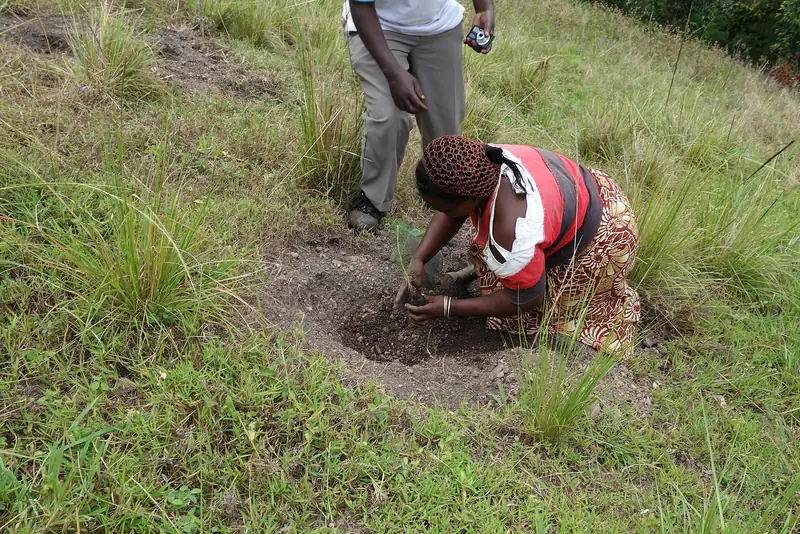
For agroforestry, the agreement should also say who owns the trees. Benefit sharing has to reach the farmers who plant and look after the trees, not stop with an intermediary. A tree that is not tended can die in drought or be cut when a family needs cash, so the arrangement should also include practical help such as seedlings, training and follow-up visits.
Boundary rules need livelihood support
Forest and reserve projects are judged on whether they offset the cost of protection. Boundary agreements and patrols on their own can push pressure onto a neighbouring patch of forest, which is the leakage problem verifiers look for. A more credible approach pairs boundary rules with livelihood support and writes down how revenue reaches households. The same logic applies to gorilla habitat at the park edge, where revenue sharing only makes up for lost access if payments are traceable and communities have a voice in how the money is spent.
What standards and labels do and do not show
Some standards look at community outcomes directly. The Climate, Community and Biodiversity Standards (CCB) can be added to a carbon standard such as Verra and look at community and biodiversity outcomes. Plan Vivo focuses on community-led land use, where smallholders design the activities and receive a large share of the benefits. These are useful signals, but a label is not proof of delivery. The CCP label, for example, does not confirm that community benefits are real or that the price is fair.
Red flags
- No written agreement with the communities whose land or trees are part of the project.
- Benefits described in general terms, with no beneficiaries, dates or payment records.
- All payments go to one intermediary, and nothing visibly reaches the farmers or households.
- Community consultation described only in marketing material.
- A seller who cannot show the arrangement but asks you to commit now.
Questions to ask a seller
- Can you share the written agreement with the community or landowners, and the date it was signed?
- Which households or groups receive payments, and what share of the carbon revenue do they receive?
- Who keeps the payment records, and can a verifier or buyer review them?
- Who decides how community funds are spent?
- Which standard assesses community outcomes, and where is its report published?
Frequently Asked Questions
Does community benefit make a credit more valuable?
Some buyers look for it and are willing to pay more where the benefits are documented. The value depends on evidence, not on the description in a sales deck.
Can a project have community benefits and still be weak on quality?
Yes. Community benefit is one part of quality. The baseline, leakage, permanence and independent verification still need to be checked separately.
Where should I read next?
See our articles on gorilla conservation credits, Uganda's wetlands, agroforestry on Ugandan farms and the CCP label.